The Clarke and Camanni Discovery: Foundation for the Clarke Protocol GHRH Analog
Introduction and Focus
This document details the scientific focus and background of the Clarke Protocol Growth Hormone-Releasing Hormone (GHRH) Analog. The product, Clarke Protocol GHRH Analog, is a research compound developed from the foundational endocrinological discoveries of Dr. Ivan J. Clarke and his team, and subsequent work by scientists like Dr. Camanni. This work is critical to understanding the regulation of the growth hormone (GH) axis and developing targeted research tools.
Product Overview: Clarke Protocol GHRH Analog
The Clarke Protocol GHRH Analog is a synthetically produced peptide intended for in-vitro and in-vivo research. Its structure is based on the truncated yet highly active N-terminal fragment of naturally occurring Growth Hormone-Releasing Hormone.
Product Specification
Detail
Product
Clarke Protocol GHRH Analog
Source
Synthetic Peptide
Primary Target
Growth Hormone-Releasing Hormone Receptor (GHRH-R)
Research Use
Studies of somatotroph function, GHRH pulsatility, and GH release mechanisms.
Storage
Lyophilized, to be stored at -20°C.
Page 2: Background and Foundational Work
The Pioneering Work of Dr. Ivan J. Clarke
The development of the Clarke Protocol GHRH Analog is rooted in the significant contributions of Dr. Ivan J. Clarke and his colleagues in the field of neuroendocrinology, particularly concerning the pulsatile release of Growth Hormone (GH).
Elucidation of GHRH Physiology
Clarke’s research, often conducted using ovine models, provided critical insights into the hypothalamic-pituitary-somatotroph axis. Key findings include:
- Pulsatility: Confirmation and characterization of the pulsatile nature of GHRH release and its direct correlation with GH secretory bursts.
- Feedback Mechanisms: Detailed mapping of the ultrashort, short, and long-loop feedback mechanisms that govern GH and GHRH secretion, including the inhibitory role of somatostatin.
- GHRH Structure-Function: Early investigations that helped delineate which parts of the GHRH molecule were essential for biological activity.
Significance of the 1-29 Fragment
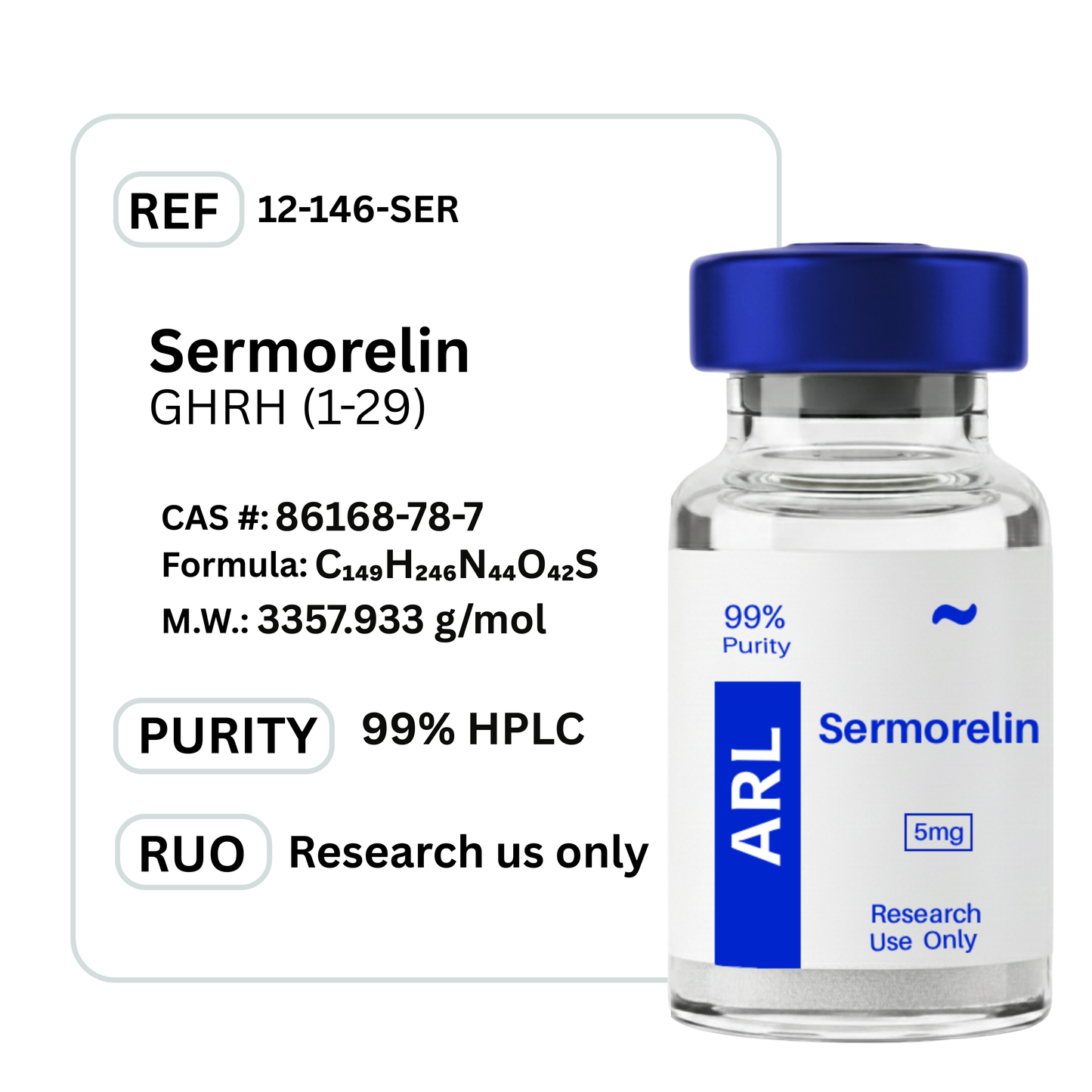
A major finding that propelled this area of research was the identification of the N-terminal 1-29 amino acid fragment of GHRH. This fragment, and its synthetic counterpart (Sermorelin), demonstrated remarkable biological efficacy.
The Role of Sermorelin as a Benchmark
The synthetic peptide based on the GHRH(1-29) sequence, often referred to as Sermorelin, stands as a critical legacy of the foundational research.
- Study of "Top-Down" Regulation: Sermorelin acts as the benchmark compound for studying the "top-down" regulation of the GH axis—stimulating GH release directly from the pituitary gland's somatotroph cells, bypassing complex hypothalamic inputs.
- Clinical Potential: Its existence established the clinical and research potential of GHRH-based therapies and research tools.
Page 3: Key Insight - Structure and Efficacy
The Critical 1-29 Amino Acid Sequence
The central premise underpinning the Clarke Protocol GHRH Analog is the realization that the first 29 amino acids of the native 44-amino acid human GHRH molecule are the functional core.
Receptor Binding and Activation
Key Insight: Demonstrates that the first 29 amino acids of GHRH are sufficient for full receptor binding and activation.
The GHRH Receptor (GHRH-R), a G protein-coupled receptor found predominantly on somatotrophs, recognizes specific domains of the GHRH peptide.
- Binding Domain: The N-terminus, particularly residues 1-15, provides the necessary structure for high-affinity binding to the extracellular domain of the GHRH-R.
- Activation Domain: The remaining residues up to 29 (16-29) contribute to the conformational change required to activate the receptor and initiate the signaling cascade (primarily via the cAMP pathway).
Truncation and Research Utility
The use of this truncated analog (the Clarke Protocol GHRH Analog) offers several advantages in a research setting:
- Purity of Signal: It provides a highly specific agonist signal directly to the GHRH-R, allowing researchers to isolate the effects of receptor activation without the complicating variables associated with the full 44-amino acid peptide's potential secondary binding sites or metabolic cleavage products.
- Stability: Often, the truncated analogs are engineered for enhanced stability against common serum proteases, extending their effective half-life in research preparations.
Page 4: Mechanism of Action in Research Context
Signaling Cascade in the Somatotroph
The Clarke Protocol GHRH Analog exerts its effect by binding to and activating the GHRH-R on the anterior pituitary somatotroph cell membrane. The activation follows a well-defined intracellular signaling pathway.
The cAMP Pathway
The primary mechanism of action involves the following steps:
- Binding: The analog binds to the GHRH-R.
- G-Protein Activation: This binding triggers the associated G-stimulatory protein ($\text{G}_\text{s}$) to exchange GTP for GDP.
- Adenylyl Cyclase: The activated $\text{G}_\text{s}$ subunit activates the enzyme adenylyl cyclase.
- cAMP Generation: Adenylyl cyclase catalyzes the conversion of ATP to cyclic AMP (cAMP).
- PKA Activation: Increased cAMP levels activate Protein Kinase A (PKA).
- Calcium Influx and GH Release: PKA mediates the phosphorylation of critical intracellular proteins, including transcription factors and calcium channels. This ultimately leads to the influx of extracellular calcium (), which is the final trigger for the exocytosis (release) of stored GH vesicles from the somatotroph.
Transcriptional Effects
Beyond immediate GH release, chronic or sustained administration in research models demonstrates a trophic effect on somatotrophs, leading to:
- Increased synthesis of GH.
- Proliferation of somatotroph cells.
- Upregulation of GHRH-R expression.
Page 5: Comparison to Endogenous GHRH
The Clarke Protocol GHRH Analog (GHRH 1-29) shares the core biological activity of endogenous GHRH (GHRH 1-44), but differences in structure lead to differing pharmacokinetic profiles, which are valuable in various research designs.
Feature
Endogenous GHRH (1-44)
Clarke Protocol GHRH Analog (1-29)
Structure
44 amino acids
29 amino acids
Primary Cleavage Site
Dimerization and rapid cleavage by dipeptidyl peptidase-4 (DPP-4) at the N-terminus.
Enhanced resistance to DPP-4 in some formulations; dependent on specific terminal modifications.
Biological Activity
Full activity
Full receptor binding and activation equivalent to 1-44
Half-Life (Plasma)
Very short (often minutes)
Typically longer than GHRH 1-44, ideal for sustained research observations
Research Application
Studying natural physiological pulsatility
Studying isolated GHRH-R agonism and sustained stimulation
Pharmacokinetic Implications for Research
The most significant research advantage of the 1-29 analog is often its prolonged half-life (when appropriately stabilized).
- Acute vs. Chronic Studies: This extended activity allows researchers to conduct studies requiring sustained GHRH-R activation, which would be challenging with the rapidly degraded endogenous hormone.
- Dosing Standardization: The synthetic nature and structural modifications (if present) ensure greater batch-to-batch consistency and predictable in vivo exposure profiles compared to working with isolated native GHRH.
Page 6: Advanced Research Applications
The Clarke Protocol GHRH Analog is an invaluable tool across several advanced areas of endocrinology and metabolism research.
1. Study of Growth Hormone Deficiency (GHD) Models
The analog is used to model and study hypothalamic GHD (type II GHD), where the pituitary gland is functionally intact but lacks sufficient GHRH stimulation.
- Assessment of Pituitary Reserve: Researchers use the analog to directly stimulate GH release, confirming the integrity of the somatotrophs in GHD animal models.
- Investigating Causes: It helps differentiate between pituitary failure (primary GHD) and hypothalamic dysfunction (secondary GHD), providing crucial diagnostic and mechanistic data in research models.
2. Research on Aging and Somatopause
The age-related decline in GH secretion, often termed somatopause, is linked to changes in the GHRH-GH-IGF-1 axis.
- Restoration of Pulsatility: Studies in aged animal models explore whether GHRH analog administration can restore a youthful pattern of GH pulsatile secretion.
- Metabolic Effects: Researchers investigate the analog's effect on age-related metabolic parameters, including body composition (lean mass, adiposity), glucose homeostasis, and bone density in preclinical models.
3. Interaction with Other Neurohormones
GHRH does not act in isolation. The analog is essential for studying its complex interactions with other regulators of the GH axis.
- Synergism with Ghrelin: Research protocols frequently combine the Clarke Protocol GHRH Analog with Ghrelin or Ghrelin Mimetics (Growth Hormone Secretagogues, GHS) to study the synergistic effects on GH release. This helps elucidate the distinct and overlapping regulatory pathways.
- Inhibition by Somatostatin: The analog is used to probe the degree and mechanism by which somatostatin suppresses GHRH-mediated GH release.
Page 7: Research Methodology and Protocols
Standardized In Vitro Protocols
Cell Culture Studies
The Clarke Protocol GHRH Analog is frequently used in primary cultures of rat or mouse pituitary cells or established somatotroph cell lines (e.g., GH3 or AtT-20 cells).
Protocol Goal: To measure the dose-dependent GH release in vitro.
Step
Detail
Cell Seeding
Plate somatotroph cells in serum-free medium 24 hours prior to assay.
Stimulation
Expose cells to varying concentrations of the GHRH Analog for a defined period (e.g., 30 minutes to 4 hours).
Measurement
Collect media and measure GH concentration using an appropriate ELISA or radioimmunoassay (RIA).
Data Analysis
Calculate the fold increase in GH release compared to basal (unstimulated) cells.
Standardized In Vivo Protocols
Pharmacokinetic and Pharmacodynamic (PK/PD) Studies
Animal models (rodents, non-human primates) are essential for assessing the full biological impact.
- Dose-Response: Researchers administer varying doses of the analog via intravenous, subcutaneous, or intraperitoneal routes.
- Sampling: Blood samples are collected at frequent intervals (e.g., every 15 minutes for 4 hours) post-administration.
- Assays: Samples are assayed for:
- Plasma levels of the GHRH Analog (PK).
- Plasma levels of GH and IGF-1 (PD).
Page 8: Analytical Considerations and Safety
Quality Control and Purity
For accurate and reliable research findings, the purity and identity of the Clarke Protocol GHRH Analog must be rigorously confirmed.
Analytical Techniques
Method
Purpose
High-Performance Liquid Chromatography (HPLC)
Confirms high purity (typically >98% required for research).
Mass Spectrometry (MS)
Verifies the exact molecular mass and sequence of the peptide to confirm identity.
Endotoxin Testing
Ensures the compound is safe for in vivo administration in research animals.
Peptide Content Analysis
Determines the actual amount of active peptide versus counter-ion or residual moisture.
Important Considerations for Handling
Due to its nature as a potent biological compound, strict laboratory protocols must be followed:
- Handling: Always handle under a certified biological safety cabinet or fume hood.
- Storage: Store the lyophilized powder at the recommended temperature (-20°C or colder). Once reconstituted with sterile water or a suitable solvent, the solution should be aliquoted and stored at 4°C for short periods or refrozen immediately.
Page 9: Ethical Framework and Regulatory Status
The Importance of Research Integrity
Research involving growth hormone regulation and its analogues is subject to rigorous ethical standards, particularly when using animal models.
Ethical Compliance
All research using the Clarke Protocol GHRH Analog must comply with:
- Institutional Animal Care and Use Committee (IACUC) protocols.
- The principles of replacement, reduction, and refinement (the 3Rs).
- Any national or international regulations governing peptide research and animal experimentation.
Regulatory Status
The specific regulatory status of the Clarke Protocol GHRH Analog is defined by its intended use.
Disclaimer: For research use only. Not for clinical administration.
This peptide is not approved by regulatory bodies (e.g., FDA, EMA) for human therapeutic or diagnostic use. Its use is strictly limited to well-controlled, laboratory-based research by qualified personnel. Any deviation from this stated research purpose constitutes misuse and is strictly prohibited.
Researchers must maintain detailed records, including:
- Batch number and Certificate of Analysis (File).
- Storage conditions and date of reconstitution.
- Detailed experimental protocols and outcomes.
Page 10: Future Directions and Summary
Emerging Research Focus Areas
The foundational discovery of the GHRH 1-29 fragment continues to inspire new avenues of research using compounds like the Clarke Protocol GHRH Analog.
Targeted Delivery Systems
Current research is exploring novel delivery systems to optimize the therapeutic potential of GHRH analogs, including:
- Long-acting formulations: PEGylation or use of liposomal encapsulation to further extend the half-life.
- Non-injectable delivery: Attempts to develop oral or transdermal formulations, though challenging due to the peptide's nature.
Applications in Neuroprotection
Emerging data suggests GHRH-R activation may have effects beyond the pituitary, including potential neuroprotective roles in the central nervous system. Future research using the Clarke Protocol GHRH Analog may explore its effects on:
- Neuronal survival and proliferation.
- Cognitive function in various animal models.
Conclusion
The Clarke Protocol GHRH Analog, based on the foundational work of Clarke and colleagues on the GHRH(1-29) sequence, is an indispensable tool for endocrinology research. Its key strength lies in the Key Insight that the first 29 amino acids are fully sufficient for full receptor binding and activation, providing researchers with a potent and specific agonist to probe the complexities of the somatotropic axis. This research compound will continue to facilitate critical discoveries in GHD, aging, and metabolic regulation.